A bedtime Shema for young children
Saying the Shema at bedtime is one of the oldest and gentlest Jewish routines — a few words said in the same place, at the same time, every night. For a young child, the value is less in the meaning of the words than in the rhythm: the same page, the same spot, the same quiet minute before sleep. A printable set makes that rhythm easy to start.
Why a bedtime routine works
Small children calm down through repetition, not novelty. A Shema said the same way each night becomes a signal the body learns — we say this, then we sleep. A page by the bed makes the routine visible, so even a child who can't read yet knows what comes next.
Keep it short and the same
The point is not to teach the whole prayer at once. Start with the first line, said together, in the same place. A printable you can hang by the bed or keep in the Shabbat box gives the routine a home and takes the remembering off your shoulders at the end of a long day.
Part of a year-round set
The bedtime Shema comes bundled with a handful of seasonal Jewish printables, so the same download stretches across the year — Shabbat candles, Havdalah, and the fall holidays — rather than a single page.
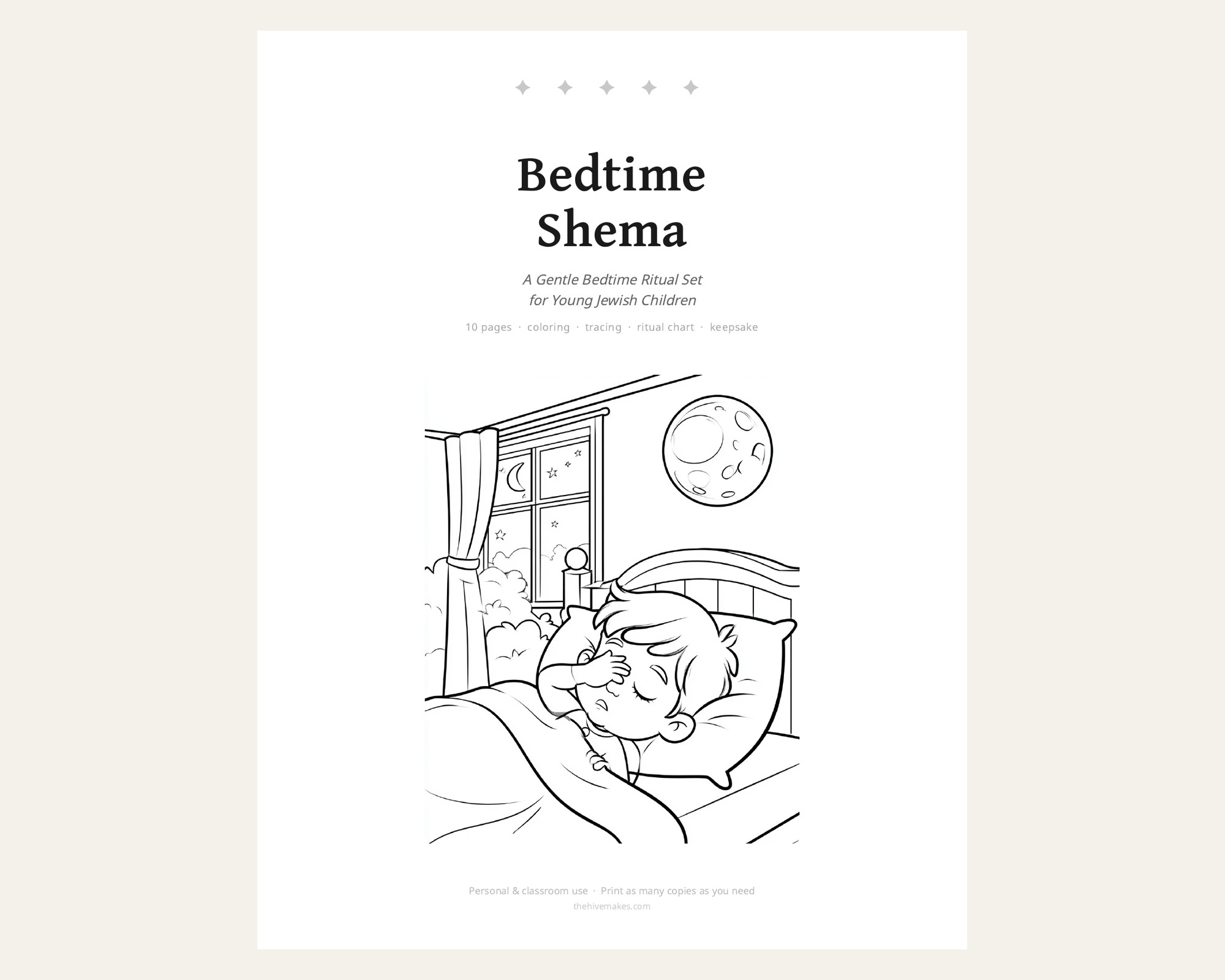
Our printable for this
Common questions
What is the bedtime Shema?
It is the practice of saying the Shema — beginning 'Shema Yisrael' — as part of a child's bedtime routine. Traditionally said lying in bed, it is one of the simplest and most repeated Jewish routines, which is what makes it work for young children.
How do I start saying the Shema with my child?
Begin with just the first line, said together in the same spot every night. Keep it short and identical night to night; a printable hung by the bed makes the routine visible and easy to keep.
What age can a child learn the Shema?
As soon as they can talk, they can say the first line with you. Understanding comes later — early on, the value is the calm, repeated routine at bedtime.