How to reconnect with your toddler after daycare
The hardest ten minutes of a parent's day are often the ten right after pick-up — you're tired, they're tired, and the reunion you pictured turns into a meltdown in the car park. The fix isn't a grand plan. It's a few small, specific things that tell a small child the most important fact of their day: you came back, and you're glad.
Don't start with a question
The instinct at pick-up is to ask — how was your day? were you good? what did you do? But a question is work, and a child who has held it together all day has nothing left to answer it with. Lead with a statement instead: “I'm so happy to see you.” Get down to their level, look at them, mean it. That one sentence does more than any question, because it answers the thing they were actually wondering all day — did you come back, and are you glad you did.
Tell them in the morning who's coming
A lot of pick-up tension is really morning tension that never got resolved. Before daycare, tell your child exactly who is collecting them at the end of the day. It closes a question a toddler can't put into words — when do I go home, and with whom? — and the reunion is calmer because it was expected.
Give them one thing to look forward to
Hand your child one small thing waiting on the other side of the day. Not a toy, not a treat to buy — a moment with you. “After I pick you up, we'll read two books.” “If it rained, we'll jump in the puddle.” It gives a long day a soft landing, and it costs nothing.
Save the talking for later
If your child doesn't want to talk in the car, that's fine — that's an answer too. Real conversation comes sideways: at dinner, in the bath, while drawing, not under direct questioning at the most-tired moment of the day. Be with them first; the words come when they're ready.
The printables that help
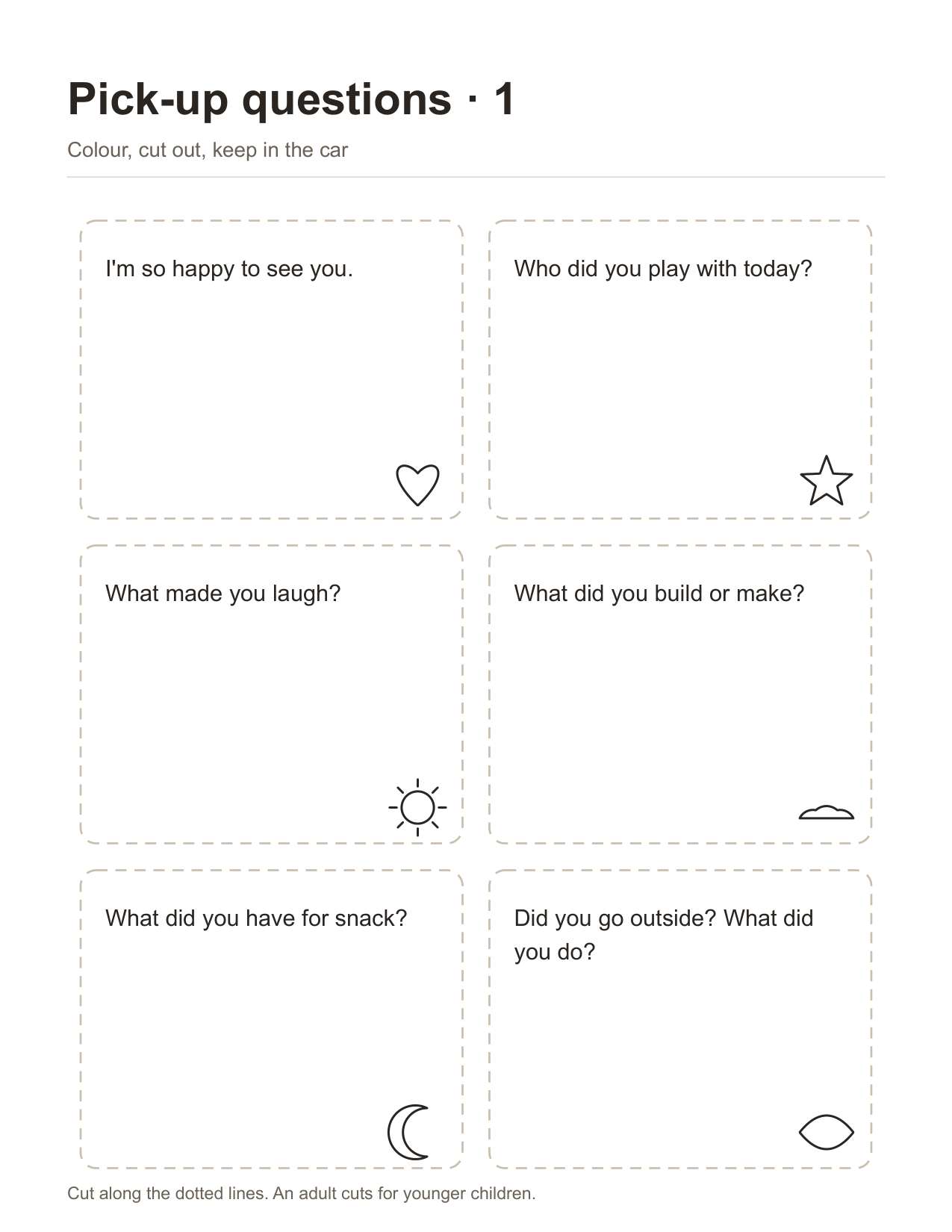
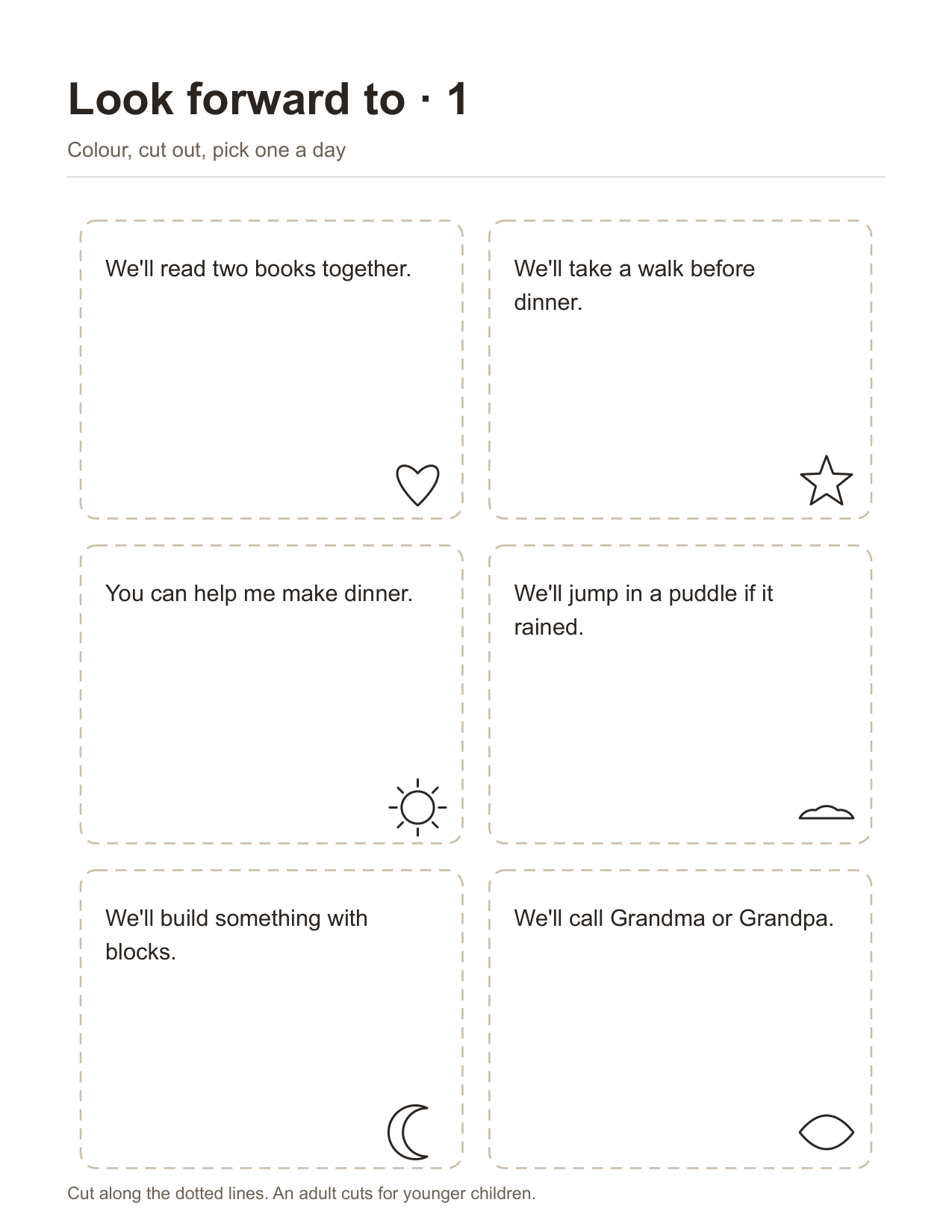
Free to print for your own family or classroom. No sign-up. US Letter PDF.
Common questions
What should I say to my toddler at daycare pick-up?
Lead with a statement, not a question: “I'm so happy to see you.” Get to their level and mean it. A tired child can't answer “how was your day”, but they can feel that you came back and you're glad. Save real conversation for later — the car, dinner, the bath.
Why does my toddler melt down at pick-up?
The end of the day is when a child who has held it together finally lets go — the meltdown is often relief, not misbehaviour. Keeping the reunion warm and low-demand (a hug and “I missed you” rather than a string of questions) tends to make it shorter.
How do I reconnect with my child after work?
Small, repeated things beat grand gestures: a warm greeting, telling them in the morning who's picking them up, and one thing to look forward to together after. Children carry the feeling of being with you far more than any single big outing.