Quiet Shabbat activities for kids
Shabbat afternoons are long, and the traditional answer — no screens — is easier to say than to do with restless kids in the house. The activities that work are the ones that are quiet, need no cutting or glue on the day, and can be picked up and put down. Here is what holds up from toddlers through early readers.
For the table: coloring that stays put
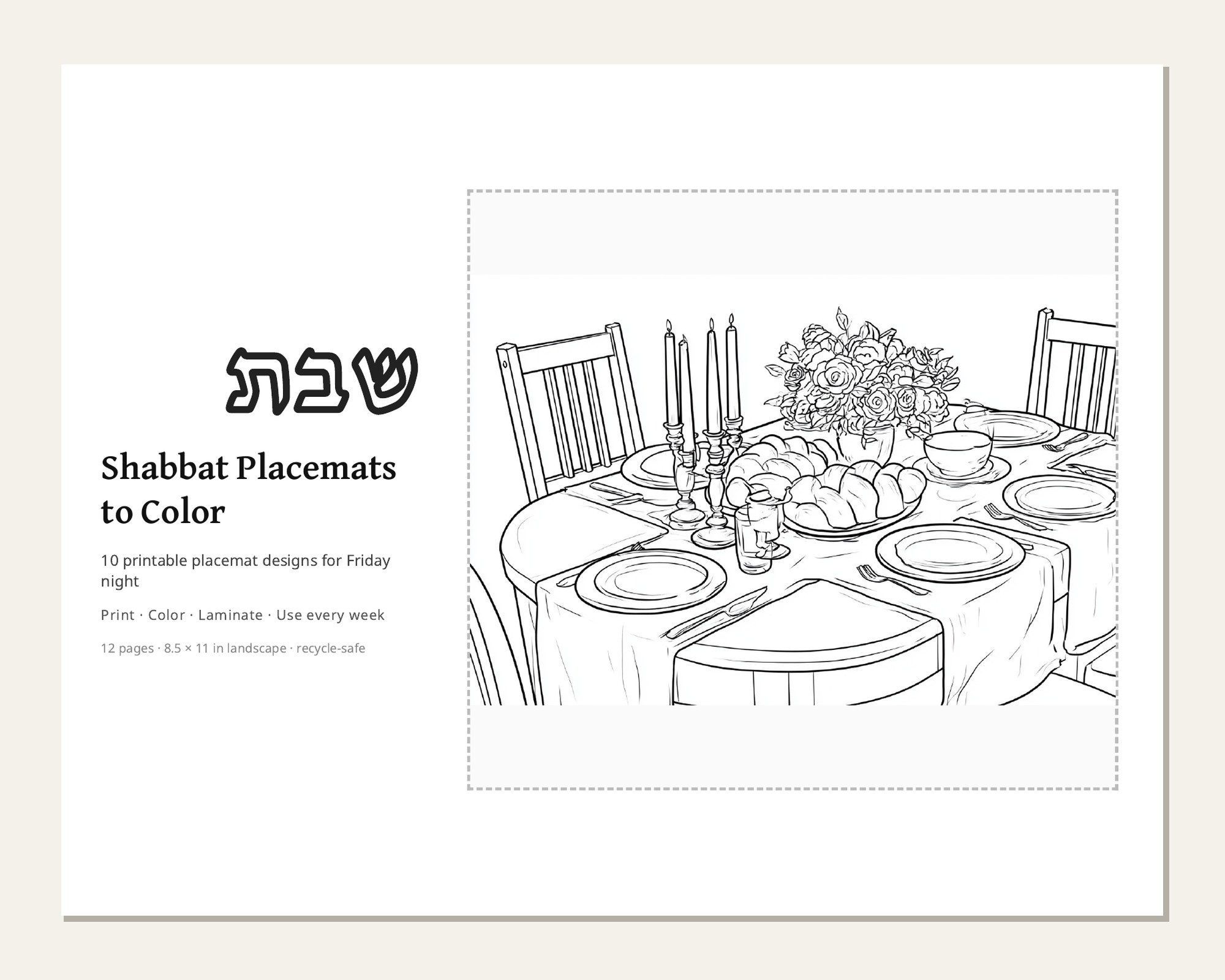
A coloring placemat is the workhorse of a calm Shabbat table. It is quiet, it needs only crayons, and it gives each child a spot that is theirs. Because it is a placemat and not a loose sheet, it doesn't blow away or migrate — it stays at the seat and comes back out next week.
For early readers: large-print word searches
Once a child can read a little, a large-print word search built around the week's ideas — Shabbat, the holidays, family — keeps them occupied without a screen and without help. Large print matters here: it means a seven-year-old and a grandparent can share the same page.
For the end of Shabbat: Havdalah
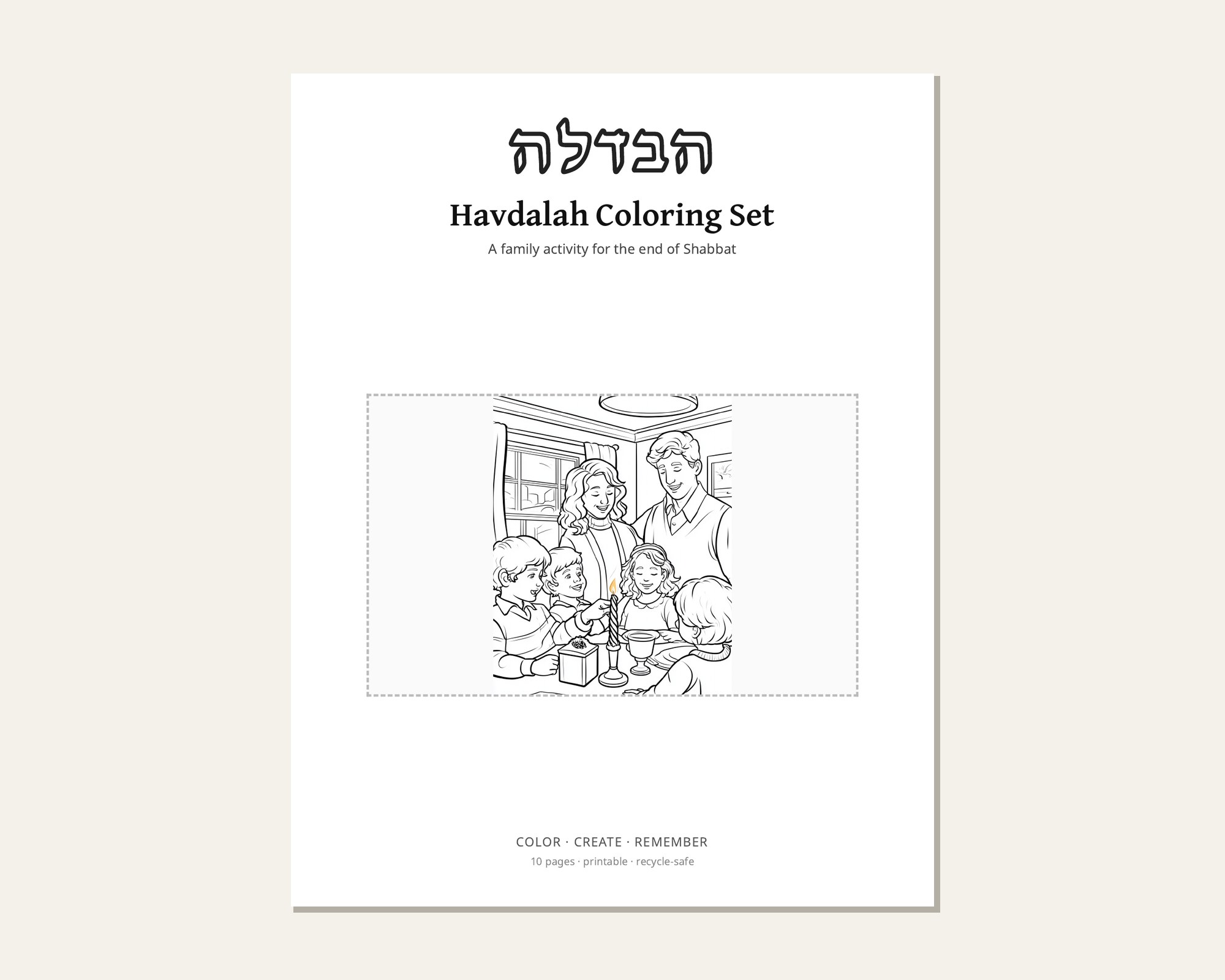
Havdalah — the short ceremony that closes Shabbat — is a natural, calming activity for the end of the day. Coloring the candle, the spices and the cup while you talk through what each one is for turns the wind-down into something the kids look forward to instead of resist.
Rotate, don't pile on
The mistake is putting everything out at once. Bring out one or two things, and change them week to week and by season. Novelty on a small scale keeps quiet activities feeling like a treat rather than a chore.

Common questions
What can kids do on Shabbat without screens?
Coloring placemats, large-print word searches for early readers, and a Havdalah coloring set for the close of the day all work without screens and without help. Choose reusable, low-mess items you can bring out and put away each week.
What are good Shabbat activities for toddlers specifically?
Toddlers do best with coloring they can do at their own seat and a simple hands-on craft like decorating a challah cover. Save reading-based activities for older siblings.
How do you keep Shabbat calm with several kids?
Give each child their own thing at the table and match the difficulty to the child — a placemat for the toddler, a word search for the reader. Same table, different pages, everyone occupied.