A handwriting workbook that shows stroke order
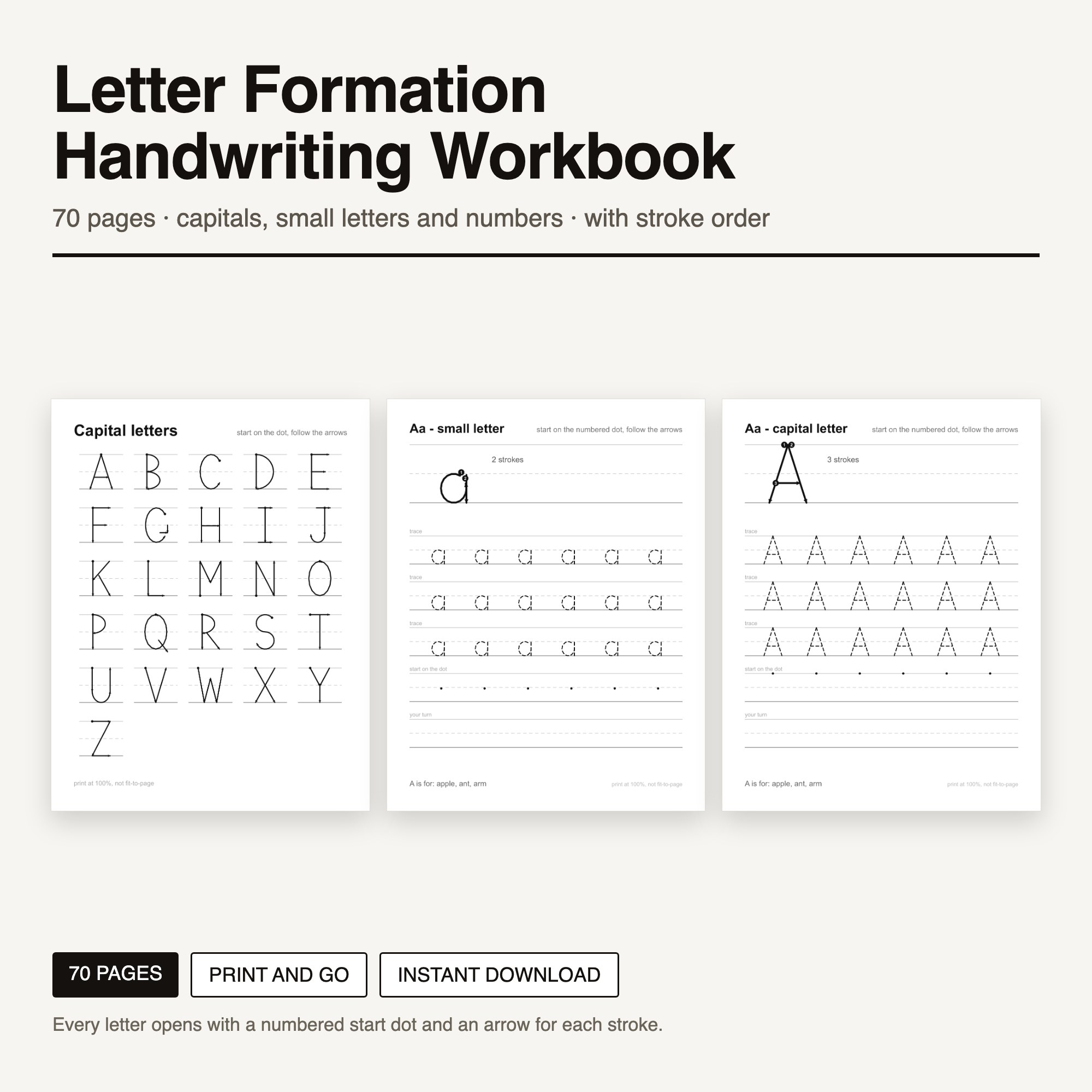
Most handwriting worksheets show a child what a letter looks like but not how to build it — so kids invent their own stroke order and it sticks, wrong. A workbook with stroke-order arrows fixes the problem at the source: it shows the starting point and the direction of each stroke, so a child forms the letter correctly the first time instead of unlearning a bad habit later.
Why stroke order matters
A letter drawn in the wrong order can look fine on the page and still slow a child down for years — it makes handwriting slower, messier under speed, and harder to join up later. Teachers spend real effort undoing self-taught stroke order. Arrows that show where to start and which way to go prevent the bad habit before it forms.
Arrows, then space to practice
The workbook pairs each letter with numbered arrows and then gives room to trace and repeat. It covers the full alphabet and numbers, and includes wall charts you can print and put up so the correct formation stays in front of a child while they work.
For ages 4–7, home or classroom
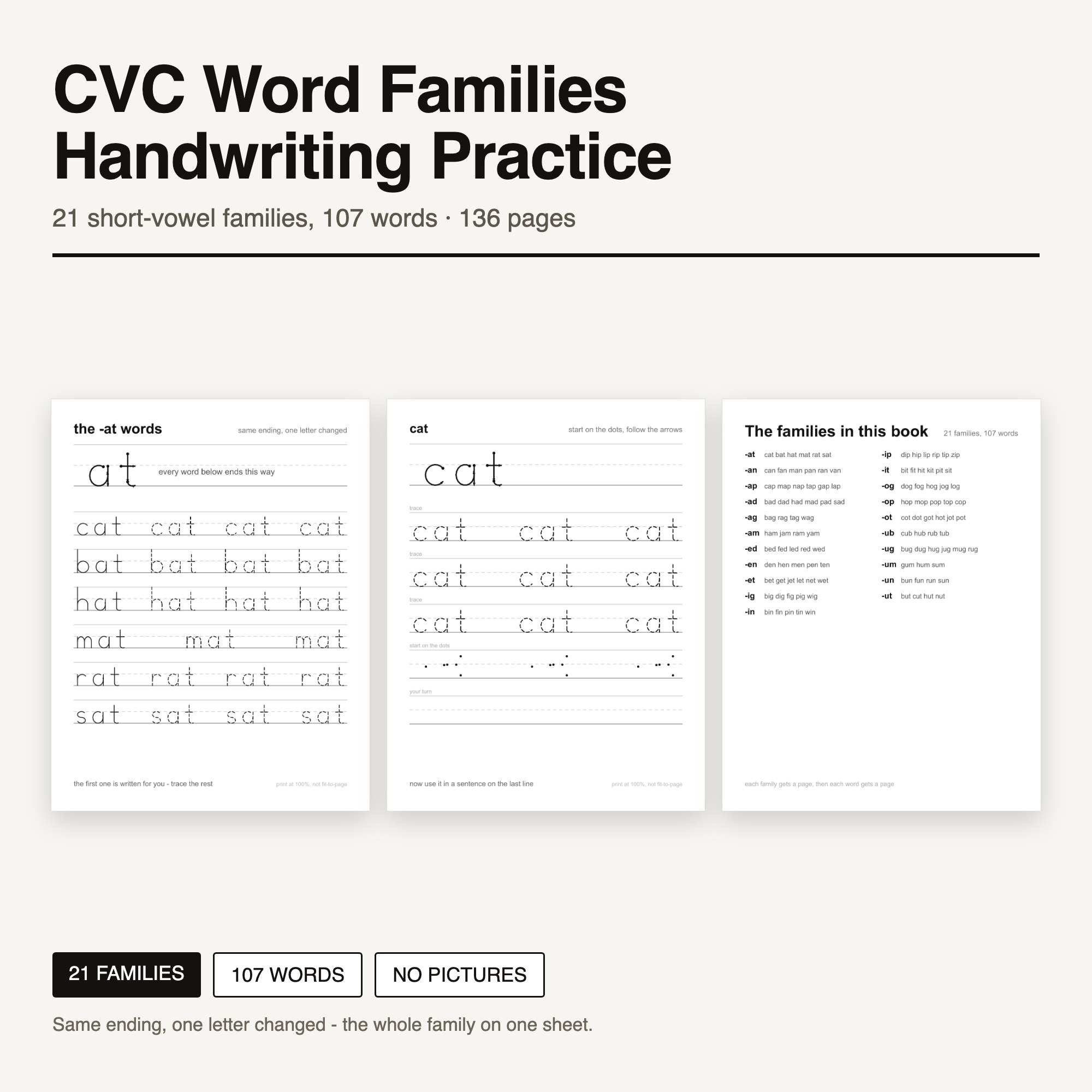
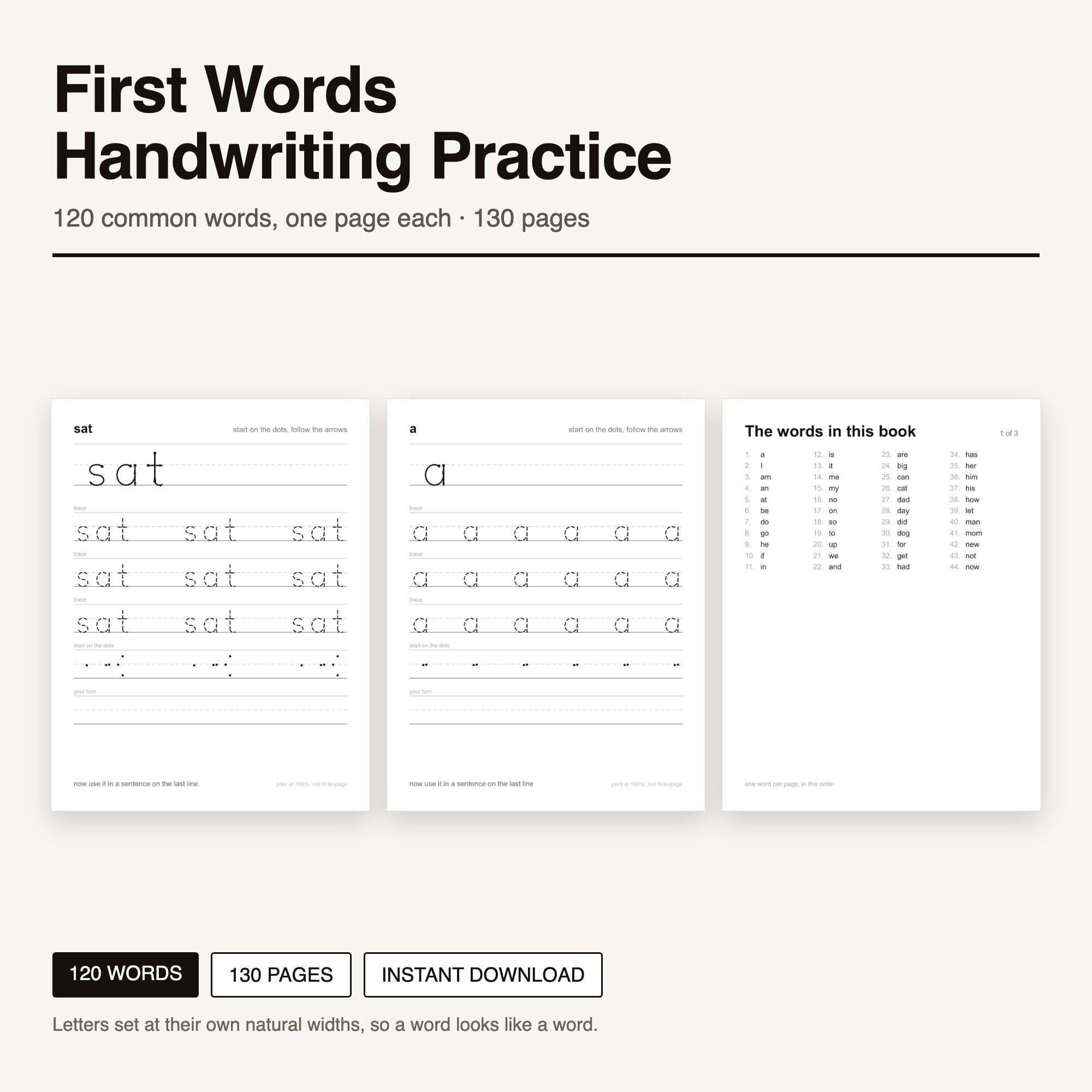
It suits the years when handwriting is first taught — roughly ages four to seven — at home or in a classroom. As a printable, you can reprint the letters a child is still working on rather than buying a whole new book. There are matching phonics and sight-word handwriting sets for when the letters are solid and it is time for words.
Common questions
Why does stroke order matter in handwriting?
Forming letters in the correct order makes handwriting faster, neater and easier to join up later. Self-taught stroke order often looks fine at first but slows a child down and is hard to correct — which is why starting with arrows that show the right order matters.
What age is a handwriting workbook for?
Roughly ages four to seven, when letter formation is first taught. Stroke-order arrows are most valuable at the very start, before habits form.
What comes after learning the letters?
Once letter formation is solid, the next step is words — there are matching sight-word and CVC (short-vowel) handwriting sets that carry the same practice into whole words.