Hebrew alphabet tracing and coloring for kids
The Aleph Bet is a lot of new shapes to hold in a small head at once. Children learn them fastest the same way they learn the English alphabet: by tracing the shape with a finger or a crayon, over and over, with a picture attached to each letter. A color-and-trace book turns twenty-two unfamiliar shapes into twenty-two things a child has drawn.
Trace, then recognize
Tracing a letter is not busywork — it is how the shape gets into muscle memory. A child who has traced aleph a dozen times recognizes it faster than one who has only looked at it. Pairing each letter with a picture gives the shape a hook to hang on.
Color makes it stick
Coloring each letter slows a child down enough to really look at it, and gives them a reason to spend time on a page they would otherwise flip past. The combination — color it, then trace it — is why this format works better for the Aleph Bet than a plain worksheet.
For home or a first classroom
It suits a parent introducing Hebrew at home and a first-year Hebrew-school or preschool classroom equally. Because it is a printable, a teacher can run a copy for each child, and a parent can reprint the letters their child is still working on.
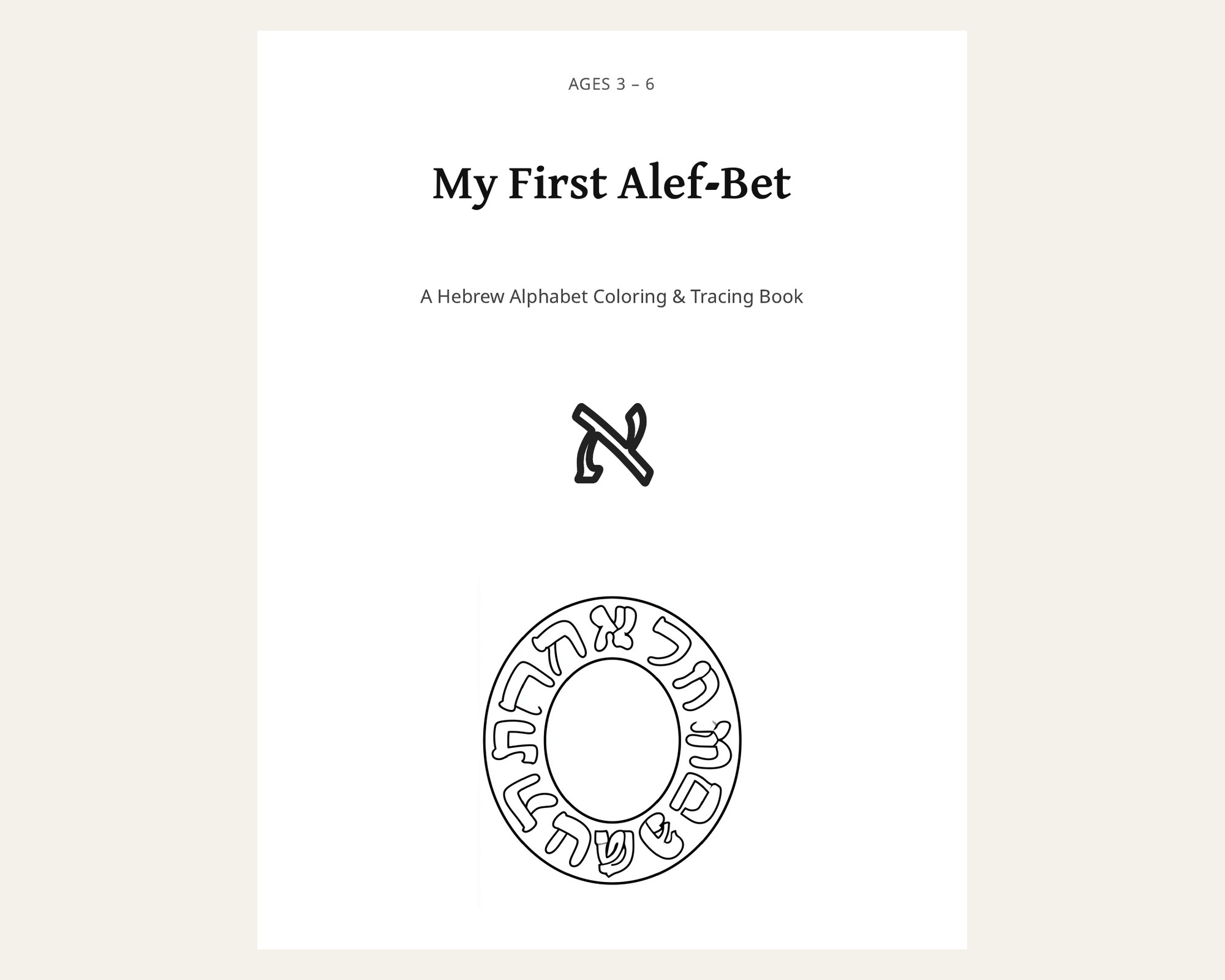
Our printable for this
Common questions
How do you teach a child the Hebrew alphabet?
The same way as any alphabet: one letter at a time, by tracing the shape and attaching a picture and sound to it. Tracing builds recognition faster than looking alone, and coloring each letter keeps a child on the page long enough to learn it.
What age is right for Aleph Bet tracing?
Roughly ages three to seven — once a child can hold a crayon and follow a line. Younger children color the letters; older ones trace and start matching sounds.
Is it 'aleph bet' or 'alef bet'?
Both spellings refer to the Hebrew alphabet; the difference is just transliteration. The letters and the way children learn them are the same.