Shabbat placemats kids can color
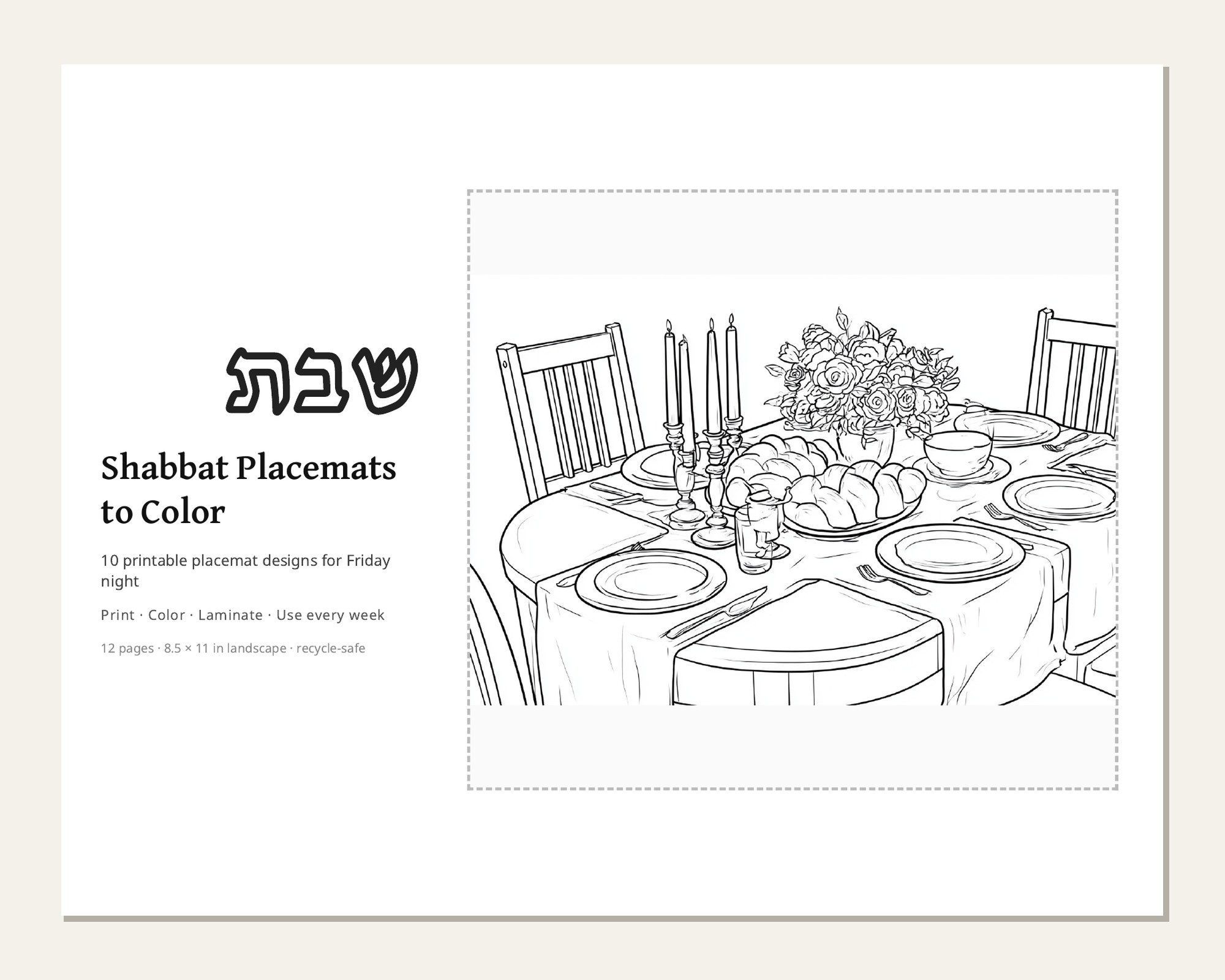
A Shabbat placemat a child colors and then eats on is a small idea that solves a real problem: how to give a young child a place at the table that is genuinely theirs. Printed at home, colored Friday afternoon, and set out at their seat, it does more to keep a child at the meal than anything you can buy pre-made.
Their spot at the table
Children behave differently when a spot is theirs. A placemat they colored marks their place, gives them something to look down at during the long parts of the meal, and turns 'sit still' into 'come see your spot.' It is the difference between a child who leaves the table and one who stays.
Color first, use second
The coloring is a Friday-afternoon activity in its own right — quiet, screen-free, and productive. Then the same sheet becomes the placemat that night. One printable does two jobs: it fills the restless hour before Shabbat and it sets the table.
Print again next week
Because it is a printable, there is no worry about ruining it. Spill on it, color it in again next week, print a fresh one for a guest's child. That is the quiet advantage of a printed placemat over a laminated store-bought one — it is endless.
Our printable for this
Common questions
What is a Shabbat placemat?
A printed placemat, usually with Shabbat imagery — candles, challah, a 'Shabbat Shalom' greeting — that a child colors and then uses at their seat during the meal. It gives a young child an ownable place at the table.
Are printable placemats reusable?
You print as many as you like, so a single purchase is effectively endless — color a fresh one each week, or print extras for guests. That is the main advantage over a single laminated placemat.
How do placemats help at the Shabbat table?
They give a child a defined spot and a quiet thing to do, which keeps young children at the table through the longer parts of the meal.